Posts

On Marzipan

There's been some   renewed   discussion   about   Marzipan   lately . Everyone seems to agree the Mojave Marzipan apps (Home, News, Stocks, Voice Memos) are a disappointment ,  pretty low quality , do not feel Mac-like . The debate is whether this is a fixable problem with the 1st version of Marzipan, or the canary in the coal mine pointing to a fundamentally flawed approach that threatens to undermine macOS as a platform. We probably won't settle that debate before WWDC. But here's my pov as a user. For context: between me, my wife & the kids, our family uses 3 iPhones, 2 iPads (1 with a keyboard), a MacBook Air, an iMac, an AppleTV, and a Watch. We live most of our "digital life" on these devices. We don't exclusively use 1 device for 1 task - e.g. whether I want to use the iMac or the iPad to do writing depends on whether I'm at home or on the go. If the wife gets the MacBook first, I'll use the iPad and vice-versa. That's the har...
Where could Shortcuts go from here?

A thorough overview of iOS 12 Shortcuts was published today by the contagiously enthusiastic Federico Viticci. Together with last week's article on iMore by Matt Cassinelli it tells you all you could ever want to know about how Siri Shortcuts will work for users, for devs, and how it compares to the pre-acquisition Workflow app. I wanted to offer 7 thoughts on where Shortcuts might go from here. First of all, macOS Shortcuts . With UIKit on Mac next year, Apple is pushing iOS developers to port their iOS apps to its power platform. It would be strange for automation, a typical power user feature, to not be transferrable from iOS to macOS. It would make sense for Apple to try to make Shorcuts macOS compatible by WWDC19, in for iOS devs porting their apps to macOS. That said, the technical challenges are also significant as the underlying technologies and interprocess communication models are quite different. One key question on macOS Shortcuts will be how they will handle ex...

On Photos' Face Recognition algorithm

I wrote an earlier post about face tagging in Photos and the challenge for users to work through their library and get everything tagged right. I promised then also some thoughts on how the face recognition algorithms themselves could maybe be improved. I continue to think that improving the user workflow around face tagging is actually more important than improving the algorithms, but there's no reason not to fight on both fronts. Mainly, the trouble comes from the fact that my kids look alike. Photos can easily recognize the difference between my own face and my wife's, but it can't tell apart my 2-year old (let's call him S) from my 4-year old (let's call him T). I've come across many (hundreds) of photos where S was tagged T, and have come to notice the things that help me as a human tell the faces apart where the Vision API falls short. First off, the big one: what mostly confuses Photos is that in the 2-year old pictures of T when he was 2, he looks v...

On Photos face tagging and workflowability

Face tagging in Photos frustrates me sometimes. I know everyone uses apps like Photos differently and cares about different things. My wife & I mainly use Photos to keep track of the family photo library (around 30k pics over 10 years). About half come from iPhones, the rest Canon or Nikon. We curate out the bad or redundant, but err on the side of keeping more (not every shot has to be a masterpiece). We crop and tweak, but aren't heavy editors. We do albums for vacations or events (~10 albums per year) and do one photobook per year. And we feel strongly about having everything facetagged and geotagged correctly. Caring about facetagging is where frustrations come from. The machine learning algorithm's suggestions aren't perfect (I'll write a separate post about that), but that doesn't bother me too much. Such algorithms will never tag everything right: you can't expect an AI to know which kid is behind a Batman mask or who that person is with their b...

Some thoughts on Xcode on iPad

There's been talk for a few years now about Xcode potentially coming to iOS. Playgrounds could obviously be a step in that direction (although Apple could also use it just to give people a taste of Swift, and then convert them to macOS). Some people have well-founded doubts about whether iPad will ever be the right environment for development. As for me, it's #1 on my personal WWDC 2018 wishlist. Talking to people online and IRL, I thought I'd write out some thoughts around why Apple should do this, and why I think they haven't done it yet. -- First: why would Apple, from a business point of view, want Xcode to exist on iOS? It is undeniably a significant investment of time and resources. Apple would be right in asking "where's the return?" in order to prioritize it against other ideas. Will it bring be an influx of new developers or have most people with an interest in app development already bought a Mac? If there is untapped market potential, wil...

Content Neutrality

Plenty of reports today that Apple is getting closer to its long stated goal of creating its own original television content. Basically expanding the Apple Music formula into movies and television, to compete with the likes of Netflix, Hulu, HBO, and Amazon. I really don't like this. Tech ecosystems are getting more sticky every year. Once all your contacts / photos / music are synced across all your devices in either the Apple or the Google / Samsung ecosystem, it becomes increasingly hard to switch. Do we want that ecosystem stickiness expanding into content? Let's think about what the next step might be. Is it that hard to imagine HBO launching Game of Thrones a day early exclusively on Apple devices? Netflix launching the new season on Daredevil exclusively on Samsung Smart TVs? A Disney-Apple alliance bringing Marvel movies early on Apple devices? Warner Bros responding by bringing DC movies early to Android devices? HBO offering John Oliver's political commen...

Small thought on Facebook

This one is off-topic so I'll keep it short. I read another article this week that tried to explain how Facebook's influence on the 2016 election was overstated, and just a fixable side effect of Facebook's real, more innocent core business model. Really? Facebook is a platform that generates revenue by letting advertisers send targeted messages based on its users' personal information. Organisations pay Facebook money to influence its users into doing things the organisations hope will make their investments worthwhile. The fact that domestic and foreign political interests want to tap into that power should not be a surprise to anyone. This is not a side-effect of the core business model - this IS the core business model.

Why losing some customers may be good for the Mac

There's been discussion  for  years  about Apple's vision for the Mac. The argument goes that iOS brings the majority of Apple's revenue, so the Mac plays second fiddle. Remember the  backlash  around the MacBook Pro  introduction, with its TouchBar with embedded iOS , causing Apple to insist that it really really still loves the Mac. Meanwhile, the iPad is maturing into a productivity device. iOS on iPad feels like a whole seperate OS . Because of this, whole segments of the Mac's typical target audience, such as students and writers, are finding themselves at home in iOS . While existing Mac users are likely to continue using their Macs for the time being, the influx of new users may slow down if iPad Pro sales are cannibalizing Mac sales. Is this bad for the Mac? Personally, I think not. I would like to offer the argument that when the Mac loses these "light productivity" customers to the iPad, the result will be a more homogeneous audience for t...

The notch makes sense... from a certain point of view

Marco Arment  has an excellent article up where he hits the nail on the head around Apple's reasons to #embracethenotch . I agree with his reasoning but disagree strongly with his conclusion that this was " courage ". I think it's the exact opposite. There's only one point of view from which it makes sense, and it's a bad one for Apple. From a purely aesthetic point of view, the notch shouldn't exist. It has a nice 1970's Star Trek vibe going on, making it timelessly futuristic, but that also makes it feel dated from the moment it's released. It doesn't make it beautiful per se. I don't think anyone will dispute that if Apple had had the technology to integrate these sensors into the display from day one, they would have done so. They didn't introduce a notch just because it looks good; otherwise, they would have added one to the bottom as well . So no, the notch is not beautiful in itself - it's a design compromise. So people s...

The path for technology for the next decade? Here's 5 guesses.

Apple isn't known for being humble in its keynotes. It modestly grades its own products on a scale from "amazing", "phenomenal", and "magical" all the way up to "revolutionary" and "insanely great". Still, phrases like "setting the path for technology for the next decade" are reserved for big occasions. Steve Jobs used such expressions in his comeback period when talking about NeXTStep that became Rhapsody that become OS X. He called the PowerPC to Intel transition a "brain transplant" to "set Apple up for the next decade". And he used it in when introducing the iPhone ("5 years ahead of the competition"). But that's about it. "The next decade" remains an expression that hasn't been watered down yet by overuse. And when Apple does choose to use it, it's usually justified in hindsight. And still, The New Yorker called the iPhone X novelties  mundane . Forbes agreed wit...

Maybe Siri should have multiple personality disorder

For some years now, there has been a race between Google, Amazon, Microsoft, Apple and others to create the best voice assistant. The interaction model for each of them is that the user asks a question to the One Assistant, which either answers the questions directly or dispatches it to a number of 3rd party provides applications. The main contenders are each gradually increasing the number of domains their assistants understand, gradually expanding their keywords and ontologies until eventually at some point in the distant future they are supposed to cover everything we do in daily life. In doing so, they allow 3rd party developers various degrees of integration to include their own functionality into the One Assistant - but at the end of the day, the user still interacts with the assistant as a single "personality". Lately I've been wondering whether that interaction model is the best approach technically, or for us as a user, or for Apple as a business strategy gi...

Maybe iPhone X is here to stay

Unless you've been living under  a rock on mars , you may have heard that the advanced iPhone which Apple plans to release tomorrow (the one without the home button) will most likely be called the " iPhone X ". But since that information was found in text form only , the open question is whether that will be "iPhone ten" or "iPhone ex". I'm going to put a stake in the ground here (knowing this may not age well beyond tomorrow) and pick a side. I think it will be "iPhone X", pronounced “ex”, for three reasons. First, releasing the "iPhone ten" alongside the "iPhone 8" is strange and clunky marketing. It invites the question "what about 9?", which triggers  unwanted comparisons with the competition . It puts the 8 and 10 products in direct competition with each other, which reflects badly on the iPhone 8, and may actually end up driving customers towards Samsung instead. It also boxes Apple in for next year...

Maybe 2018 will be the year UIKit replaces AppKit on the Mac

Image
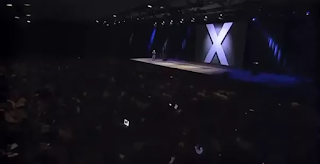
At the 2007 iPhone launch, Steve Jobs proudly proclaimed "iPhone runs OS X" . In practice, iOS was relatively feature-limited and buttoned-down compared to macOS. It took Apple years to re-build the feature richness that macOS enjoyed in a modern and secure way for the mobile age. Successive iOS releases improved the situation, and especially the last 4 years iOS made big leaps forward. Between iOS 8 and 11 we got app extensions, split-screen multitasking, APFS, drag-and-drop and a Files app. Together these brought iOS almost to the level of productivity of macOS. People are now using iPads as primary work machines, which was unthinkable in 2012. This is great for the iOS ecosystem. As certain categories of pro users (writers for example) flock towards iOS, the market for pro apps grows. The app store thrives, and Pro apps like Ulysses, Scrivener, Pixelmator, Affinity have no trouble finding an audience of professionals paying good money. The ongoing debate around subs...